



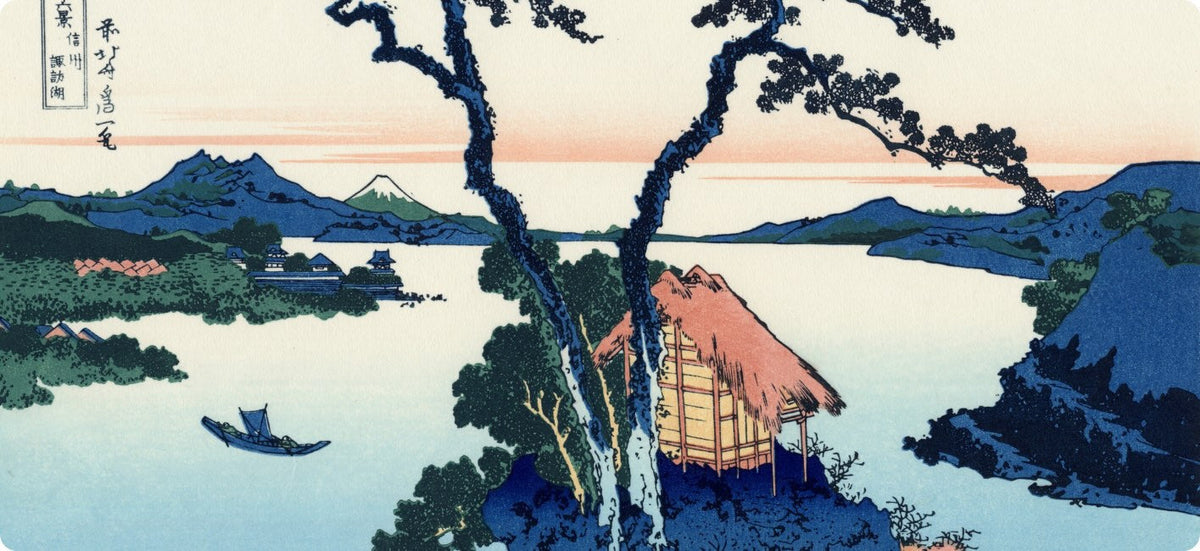
"Japonisme" or the influence of Japan in Western painting.
Japonisme is an artistic and cultural movement that saw Japanese art and aesthetics profoundly influence Western artists, mainly French, from the 1860s onwards.
This fascination, triggered by Japan's opening to international trade, introduced new aesthetic perspectives such as asymmetrical compositions and vivid colors, affecting various artistic fields including painting, decorative arts, literature, and even fashion.
Major figures like Monet and Van Gogh were particularly inspired by Japanese prints, and japonisme helped shape new artistic movements like Art Nouveau. By presenting the history, manifestations, and key players of this cultural exchange, the texts highlight the lasting impact of Japanese art on Western modernity.
The origin of Japonism can be attributed to several interdependent factors, the most important of which are:
Japan's Opening to the Western World : After more than two centuries of isolation, Japan opened up to international trade in the 1860s, following the intervention of Commodore Perry in 1853. This event is considered the starting point that made Japanese art and culture accessible to the West.
The arrival of Japanese art objects in the West : The opening of Japanese ports led to an unprecedented influx of Japanese objects in Europe and North America. These objects included prints, of the silks, of the porcelain, of the screens, of the lacquers and paint. Initially, the prints sometimes arrived by chance, used to wrap porcelain.
Japan's participation in the World's Fairs : Japan's participation in Universal exhibitions of London in 1862 and Paris in 1867 then 1878 played a crucial role in presenting Japanese art and craftsmanship to the Western public. Japan even presented a national pavilion at the 1867 Universal Exposition in Paris.
The interest of collectors, art critics, and dealers : Personalities such as the art critic Philippe Burty played an essential role; moreover, he coined the term "japonisme" in 1872 to describe this cultural enthusiasm. Collectors such as Théodore Duret, Edmond de Goncourt, and Émile Guimet contributed to the dissemination of Japanese works. Merchants like Siegfried Bing And Hayashi Tadamasa made a fortune by organizing the import and sale of rare pieces, making Japanese art more accessible.
The search for new sources of inspiration by Western artists : Western artists, seeking to break away from classicism and the conservative styles of the time, were fascinated by the new aesthetics offered by Japanese art, notably the lines, THE curves, there simplification of forms, L'abandon of perspective and theuse of bright colors. L'ukiyo-e, in particular, has become a new source of inspiration for the Impressionists and the Art Nouveau artists. Vincent van Gogh even declared that "all my work is based on Japanese art".
In short, Japonism was born from the meeting between a West in search of artistic novelty and a Japan that was opening up to the world, thus allowing the discovery and appreciation of a radically different aesthetic.
The massive arrival of Japanese objects, their presentation at international events, and the active role of collectors and dealers fueled this enthusiasm, which profoundly influenced Western art at the end of the 19th century.

The massive arrival of Japanese objects, their presentation at international events, and the active role of collectors and dealers fueled this enthusiasm, which profoundly influenced Western art at the end of the 19th century.
The main characteristics of Japonism manifest in various ways:
New aesthetics in fine arts : The art resulting from this influence, often in reaction to classicism, inaugurated new aesthetic choices such as lines, THE curves, and the natural elements. The painters retained from Japanese art the simplification of forms, THE taste of the winding line (especially for the silhouettes), theabandon of perspective, as well as thelove of bright colors.
Influence of Japanese print (ukiyo-e) : THE Japanese prints have been the subject of a extraordinary enthusiasm in the West. They helped to make artists known such as Hokusai, Hiroshige, Moronobu, and Utamaro. L'ukiyo-e has become a new source of inspiration for painters European Impressionists and then for Art Nouveau artists. Artists like Claude Monet have built up significant collections of Japanese prints, which influenced their work, notably the creation of his water garden at Giverny. Vincent Van Gogh stated in 1888 that "all my work is based on Japanese". Mary Cassatt was also a great admirer of Japanese art and her enthusiasm changed her artistic trajectory. Camille Pissarro stated that the "Japanese artists confirm me in our visual bias".
Renewal of formats: Artists have also renewed the formats, notably adopting the long vertical strip of kakemono.
New themes: The Nabis have taken up certain themes specific to "ukiyo-e", or "images of the floating world", trying to fix some fleeting impressions and moments of daily life. This interest in moments of life has become a specificity of this group. Japanese depictions of entertainment districts, popular actors, and the "floating world" encouraged European artists to find subjects in public performances and nightlife.
Influence on decorative arts: As early as the 1860s, Japanese forms and decorations inspired craftsmen, artists, and writers. L'Art Nouveau in particular includes many Japanese references and influences. An influence is observed in the furniture (with the emergence of an "Anglo-Japanese style" favoring sobriety and geometry), there ceramic, THE lacquers, THE textiles and the fashion. Japanese natural motifs, such as butterflies, turtles, flowers, and birds, became features of Art Nouveau.
Opening of Japan and distribution of objects: Japan's opening to the West from the 1860s and its participation in the World's Fairs allowed a large quantity of Japanese objects (silks, porcelains, screens, ivories, lacquers, paintings, prints) to arrive in Europe, which fascinated the public and collectors.. Merchants like Siegfried Bing and Hayashi Tadamasa played a crucial role in the import and dissemination of these objects.
Collectors and art critics: Collectors and art critics like Philippe Burty (who coined the term "japonisme" in 1872), Théodore Duret and Edmond de Goncourt played an essential role in the recognition and dissemination of Japanese art.
In summary, Japonism is characterized by a fascination for Japanese aesthetics, a adoption of its visual and thematic principles by Western artists, and a integration of Japanese patterns and techniques in various forms of art and craft.

Many Western artists have been deeply inspired by the Japonism, a movement born from the fascination with Japanese art and culture after Japan opened to international trade in the 1860s. Among the most notable, we find:
Claude Monet : He was particularly influenced by the taste for Japan and built a collection of two hundred and thirty-one Japanese prints. These prints inspired him to create his water garden in Giverny, where he imported Japanese plants, including the famous water lilies, and built a Japanese bridge.
The Nabis : This group of post-Impressionist painters was deeply influenced by Japanese art, going beyond the mere pursuit of exoticism. They retained the simplification of forms, THE taste of the winding line, L'abandon of perspective and thelove of bright colors. They also adopted the vertical format of the kakemono and were interested in the themes of theukiyo-e. Among the influenced Nabis, there are Pierre Bonnard, nicknamed the "nabi japonard", And Edouard Vuillard.
Vincent van Gogh : He stated in a letter from 1888 that "all my work is based on Japanese". He owned more than 400 Japanese prints and created works directly inspired by these, such as a copy of The Courtesan of Eisen And Japonaiserie. Plum trees in bloom according to Hiroshige.
Mary Cassatt : She was a great admirer of Japanese art, collecting prints by Hiroshige and Hokusai, among others. His enthusiasm for Japanese art profoundly influenced his artistic development. His print The Toilet (circa 1890-1891) is directly inspired by the technique and aesthetics of ukiyo-e.
Edgar Degas : He was among the artists who collected Japanese prints in Paris from the late 1850s.. Her Portrait of James Tissot (1867-1868) also demonstrates his interest in Japanese aesthetics.
Paul Gauguin : He is among the European painters who are followers of Japonism.
James McNeill Whistler : As early as 1864, he was considered an artist influenced by Japonism. He created works such as Whimsy in purple and gold. The golden screen (circa March 1865).
James Tissot : He began exploring Japanese themes in his paintings around 1864-1865, at the same time as Whistler. Among his works, there are The Japanese Woman in the Bath (1864)And Young woman holding Japanese objects (1865). He even gave drawing lessons to Prince Tokugawa Akitake.
Alfred Stevens : He used to frequent the shop The Chinese Gate where he obtained objects from the Far East that he incorporated into his paintings depicting bourgeois interiors. Works like The Japanese Parisian (1872) and The Japanese Dress (around 1872) bear witness to this influence.
Edouard Manet : He was one of the collectors of Japanese prints. Her Portrait of Émile Zola (1868) includes Japanese elements.
George Hendrik Breitner : This Dutch painter created a series of at least six canvases of young girls in kimono (1893-1894) inspired by his own photographs.
Other artists also mentioned as having been influenced by Japonism include Renoir, Chase, Bilińska-Bohdanowicz, Klimt, Auburtin, Henri Rivière, Felix Valloton, Toulouse-Lautrec, Amédée Jewel, William Merritt Chase, Georges Rochegrosse, And Aimé-Nicolas Morot. The entire movement of theArt Nouveau also owes much to Japanese references and influences.



User Name 2 Days ago
Lorem ipsum dolor sit amet, consectetuer adipiscing elit. Aenean commodo ligula eget dolor.